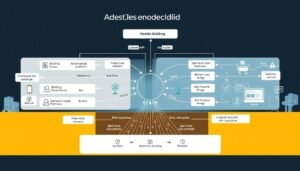
The way digital ads are bought and sold is more complex than ever. Top publishers now connect with dozens of different technology platforms. This creates a maze for advertisers trying to reach their audience.
An ad impression can travel through hundreds of possible routes before it reaches a user. Each extra step can add hidden fees and reduce transparency. This means a significant part of an advertising budget might not go toward showing ads.
Studies show that up to 15% of every programmatic dollar is lost. These funds disappear due to redundant tech layers and inefficient routes. This directly impacts how much revenue a publisher ultimately receives.
In response, a major shift is happening. Brands and agencies are adopting new strategies to clean up this process. They are focusing on finding the most direct and efficient routes to purchase.
This strategic approach helps advertisers compete more effectively. It ensures more money is spent on actual media placements. The goal is to gain better control over investments and improve campaign results.
Key Takeaways
- The digital ad ecosystem is crowded with many intermediaries between advertisers and publishers.
- Individual ad impressions can have an overwhelming number of potential routes, adding complexity.
- Inefficient processes can lead to a substantial portion of ad spend being lost to hidden fees.
- A growing majority of industry players are now actively implementing strategies to address this.
- Streamlining these processes helps ensure more budget reaches publishers and funds real impressions.
- This evolution empowers buyers with greater control and transparency over their media investments.
Exploring the Programmatic Supply Chain
The digital advertising ecosystem is built on a complex network. This network connects content creators with brands seeking audiences. Understanding its structure is the first step toward making smarter buying decisions.
Header bidding changed the game for publishers when it became common. Starting around 2014, it allowed websites to offer ad space to many buyers at once. This created more competition and potentially higher revenue.
The Role of SSPs and Intermediaries
Supply-side platforms (SSPs) act on behalf of publishers. They manage the process of selling ad impressions to demand-side platforms (DSPs). Each SSP connects with numerous DSPs to maximize opportunities.
This means a single ad spot can be seen by over a hundred potential bidders. However, each intermediary adds its own rules and costs. They use different auction styles, like second-price or first-price models.
Complex Pathways in Digital Advertising
The connections create a web of possible routes for an ad. A publisher working with several SSPs, each linked to many DSPs, creates a huge number of pathways. This complexity can lead to inefficiency.
A critical issue is auction duplication. A DSP might get the same impression opportunity from multiple sources. This can cause advertisers to unintentionally compete against themselves, increasing costs.
While designed to boost publisher earnings, this intricate system can reduce clarity. A significant part of an advertiser’s budget may be spent on fees rather than actual ad space.
What Is Supply Path Optimization (SPO)?
Supply path optimization represents a fundamental shift in how advertisers approach programmatic buying decisions. This method helps companies navigate the complex digital advertising landscape more effectively.
The core idea involves finding the most direct connections between buyers and sellers. By reducing unnecessary steps, businesses can improve their advertising performance significantly.
Defining SPO in the Modern Ad Ecosystem
Supply path optimization is the practice of selecting the most efficient routes for purchasing digital ads. It emerged around 2017 as a response to growing complexity in programmatic advertising.
According to industry expert Mike Racic, this approach means “understanding who is touching your inventory and removing as many touches as you possibly can.” This philosophy drives the entire process.
SPO serves as both a technical solution and strategic business approach. Advertisers analyze available routes to determine which intermediaries genuinely add value versus those that merely extract fees.
The practice helps companies reduce wasted spending and improve campaign results. It’s an ongoing process that requires regular evaluation as market conditions change.
The main benefit is gaining better control over advertising investments. This leads to more budget reaching actual media placements rather than intermediary costs.
Benefits of Supply Path Optimization, SPO, Routed Traffic
Companies that refine their approach to inventory acquisition are reporting better results across multiple metrics. This strategic method creates advantages for everyone involved in digital advertising.
Enhancing Cost-Efficiency and Transparency
SPO delivers immediate financial benefits by cutting unnecessary expenses. Brands see lower media costs when they eliminate redundant steps in the buying process.
The same advertising budget can purchase more high-quality impressions. This improvement directly boosts campaign performance without requiring additional spending.
Transparency increases significantly with this approach. Advertisers gain clear visibility into where their dollars actually go.
They can see which partners add genuine value to transactions. This clarity helps build trust across the entire ecosystem.
Inventory quality improves as fraudulent opportunities decrease. Ads appear in safer, more viewable placements that reach intended audiences.
Publishers benefit from stronger relationships with quality demand sources. This leads to better monetization and higher revenue for media owners.
The entire system becomes more efficient and effective. Everyone wins when transactions are streamlined and transparent.
Improving Data Quality and Signal Fidelity
The journey of an ad impression through a convoluted chain can severely degrade the information that powers effective targeting. This loss of signal integrity is a hidden cost that impacts campaign success.
A streamlined approach to buying helps preserve the original context and details provided by publishers. This ensures advertisers work with accurate information.
Reducing Metadata Distortion
Think of a long supply chain like a game of telephone. Critical details get lost or altered with each handoff.
Page context, ad placement, and viewability metrics can become distorted. This makes it hard to value inventory correctly and ensure brand safety.
With fewer intermediaries, this metadata remains clean and reliable. Advertisers know exactly what they are bidding on.
Maintaining High-Quality Audience Insights
Direct connections also protect user signals. This includes data for frequency capping and cross-device recognition.
When this audience information stays intact, targeting becomes more precise. Campaigns respect user privacy and deliver better performance.
Accurate data leads to smarter bidding decisions. It helps identify truly valuable impression opportunities.
Leveraging AI and Real-Time Optimization in SPO
Modern advertising technology now leverages machine learning to make real-time decisions that were once impossible. This advancement transforms how advertisers manage their inventory selection process.
Data-Driven Supply Decisions
Artificial intelligence systems analyze massive amounts of information instantly. They evaluate historical results and current market conditions simultaneously.
These platforms process bidding data to identify the most effective connections. They automatically adjust offers based on real-time performance metrics.
The approach enables continuous improvement as algorithms learn from each transaction. This creates a feedback loop that refines decision-making over time.
Case Examples of AI in Action
The Trade Desk’s Kokai platform demonstrates this capability. It uses advanced algorithms to select inventory sources intelligently.
Another example comes from Criteo, which streamlined its partner network significantly. The company removed numerous intermediaries while maintaining campaign effectiveness.
This consolidation achieved near-complete visibility into the advertising ecosystem. The result was improved efficiency without sacrificing results.
Industry experts predict these capabilities will grow even more sophisticated. Future systems will handle increasingly complex decisions with greater precision.
Direct Publisher Relationships and Blue Lists Approach
Establishing direct connections with publishers marks a significant evolution in programmatic advertising strategy. This approach creates more efficient routes to premium inventory while maintaining data integrity.
Initiatives like OpenPath demonstrate this shift. The Trade Desk’s platform connects advertisers directly with over 300 integrated publishers.
These direct connections bypass traditional intermediaries. They provide clean metadata and full placement transparency.
Streamlining Direct Inventory Paths
Direct relationships offer advantages beyond cost savings. Advertisers gain access to exclusive inventory not available through reseller channels.
They also benefit from preferential pricing arrangements. Enhanced collaboration opportunities enable custom audience targeting approaches.
The Blue Lists framework provides sophisticated control for advertisers with specific partnership needs. This solution offers three configuration levels to balance efficiency with strategic commitments.
AI-optimized settings let algorithms choose the most efficient routes across all available sources. Partial optimization focuses spending on preferred partners while allowing AI to find additional efficiencies.
Manual configuration restricts buying to specific, commercially preferred paths. This flexibility accommodates real-world business complexities and volume commitments.
Effective direct strategies require ongoing relationship management. The advertising landscape continuously evolves as publishers adjust their monetization approaches.
Optimizing Costs and Reducing Hidden Fees
Financial inefficiency remains one of the biggest challenges in programmatic advertising today. Industry research reveals startling gaps between advertiser spending and publisher compensation.
The ISBA study found that only 51% of advertising dollars typically reach content creators. A significant 15% disappears as an “unknown delta” with no clear attribution.
Minimizing Unnecessary Intermediary Fees
Each additional technology layer extracts fees from the advertising budget. Multiple supply-side platforms charge per-impression costs and percentage-based revenue shares.
This complex chain creates situations where advertisers unknowingly bid against themselves. Duplicate auction paths drive up media prices without adding value.
The transparency problem becomes apparent when examining unattributed costs. Approximately one-third of supply chain expenses cannot be traced to specific recipients.
Publishers sometimes believe more technology partners increase yield. However, excessive complexity can actually reduce net revenue through technical overhead and user experience degradation.
Effective cost management requires clear visibility into each intermediary’s contribution. This approach ensures fees correspond to genuine value provided.
The result is a more sustainable ecosystem where budgets purchase more quality impressions. Publishers receive fair compensation that supports continued content investment.
Streamlining the Supply Chain with Fewer Intermediaries
Publishers are increasingly focusing on quality over quantity when selecting their technology partners. This industry shift represents a strategic move toward more meaningful relationships with fewer SSPs. The goal is to maximize value while reducing complexity.
Media companies now carefully evaluate which partnerships deliver genuine incremental demand. They assess each partner’s unique capabilities and fee structures. This helps identify relationships that contribute meaningfully to revenue.
The benefits extend beyond simple cost reduction. Streamlined chains improve page load times and user experience. They also simplify reporting and provide clearer performance attribution.
Consolidation creates opportunities for preferential partnership terms. Publishers gain negotiating leverage with concentrated inventory. This can lead to reduced fees and priority access to premium demand.
Self-serve platforms empower publishers to take direct control. These tools help establish direct connections and transition to transparent fee models. The result is predictable economics and improved operational efficiency.
Effective streamlining requires ongoing performance monitoring. Partnerships must be regularly evaluated to ensure continued value delivery. This approach keeps strategies optimal as market conditions evolve.
Implementing Effective SPO Strategies
Successful adoption of supply path optimization begins with a clear methodology for evaluating and selecting the most efficient routes. Advertisers should start by mapping their current partner network to understand each step in the buying journey.
A thorough audit of inventory sources validates quality, transparency, and pricing. Working with trusted technology partners ensures consistent supply quality throughout campaigns.
Customizing SPO Rules within DSPs
Modern demand-side platforms offer sophisticated controls for encoding buying preferences directly into bidding logic. Advertisers can establish preferred supplier lists and set maximum acceptable fees.
These tools allow automated rules that evaluate available paths against defined criteria. The system routes bids through preferred channels without manual intervention for each opportunity.
Balancing Manual and Automated Optimization
Effective implementation requires finding the right mix between fixed rules and flexible AI-driven decisions. Strategic partnership commitments may warrant manual oversight for certain campaigns.
Standard display inventory often benefits from AI optimization based on real-time performance signals. This balanced approach ensures both efficiency and strategic alignment.
Continuous monitoring and adaptation keep strategies effective as market conditions evolve. Regular evaluation identifies new opportunities and prevents unintended consequences.
Closing Thoughts on Transforming Inventory Buying
Today’s advertising landscape demands a more intelligent approach to media buying that prioritizes transparency and efficiency. This strategic shift goes beyond simple cost reduction to create meaningful improvements across the entire ecosystem.
The practice of refining inventory acquisition represents a holistic strategy. It enhances data quality, improves campaign performance, and builds sustainable relationships between advertisers and publishers.
This evolution benefits all participants in the digital advertising space. Buyers gain better control over their investments while publishers receive fair compensation for quality content.
The industry will continue to advance with new technologies and standards. Maintaining an effective approach requires ongoing commitment as the media landscape evolves.
The ultimate goal is creating a marketplace where value determines success. Every impression should deliver maximum impact for both audience engagement and revenue generation.