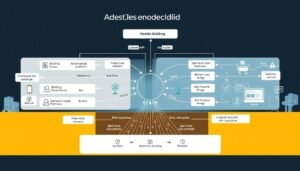
In the fast-paced world of programmatic advertising, every dollar counts. Advertisers are constantly seeking tools to maximize their return on investment. One powerful technology designed for this purpose is bid shading.
This technique helps optimize your spending in digital auctions. It aims to find the sweet spot between winning ad space and paying a fair price. The goal is to reduce your costs without hurting campaign performance.
Recent research reveals a surprising knowledge gap. About 70% of digital media buyers pay for bid shading tools they don’t fully understand. Only 35% feel extremely confident in how it works. Shockingly, one-third of buyers are unaware this technology even exists.
This highlights an urgent need for clarity. Understanding bid shading is no longer optional. It’s a competitive necessity in today’s advertising landscape.
Key Takeaways
- Bid shading is a cost-saving technology used in programmatic advertising.
- It helps advertisers pay fair market prices instead of their maximum bid.
- Demand-side platforms (DSPs) often apply this technique automatically.
- Many advertisers use bid shading without fully grasping its mechanics.
- Mastering this tool is essential for maximizing advertising budgets.
Introduction to Bid Shading in Programmatic Advertising
Digital advertising auctions have undergone significant transformation in recent years. This evolution has introduced new methods for cost optimization. Advertisers now have access to sophisticated tools for maximizing their investment.
Defining Bid Shading in Modern Ad Auctions
Bid shading represents a predictive technology that helps advertisers optimize their spending. It automatically adjusts bid amounts to appropriate market-clearing prices. This prevents overpayment while maintaining competitive positioning.
The technology serves as an intelligent intermediary between maximum willingness to pay and actual auction requirements. It uses historical data and machine learning to calculate optimal prices. This ensures bids are high enough to win impressions but avoid unnecessary expenditure.
The Evolution from Second-Price to First-Price Auctions
The advertising industry has shifted from second-price to first-price auction models. In second-price auctions, winners paid just one cent above the second-highest bid. For example, a bidder willing to pay $8 might only pay $5.01.
Header bidding technology disrupted traditional models by allowing publishers to offer inventory to multiple exchanges simultaneously. This created unprecedented competition. Major platforms like Google Ad Manager adopted first-price auctions for greater transparency.
In first-price auctions, the highest bidder pays exactly what they bid. This transition introduced the “winner’s curse” where advertisers could overpay. Bid shading technology emerged to address this market need effectively.
Exploring the Fundamentals of DSP Behavior
Modern advertising technology operates with incredible speed and precision. Demand-side platforms have become essential tools for managing complex campaigns. These systems make countless decisions in the blink of an eye.
This process begins when a user loads a webpage. The platform instantly evaluates the advertising opportunity. It considers campaign goals, audience details, and past results.
Every impression is assessed for its potential value. The system references a wealth of historical data. This includes information about the publisher, ad placement, and user location.
This evaluation happens in milliseconds. The goal is to determine the maximum appropriate offer. It’s a delicate balance between winning and overspending.
How Platforms Adjust Offers in Real-Time
Once the initial value is set, further refinement occurs. The technology analyzes patterns from similar past auctions. It looks for the optimal price point.
This entire procedure is automated and continuous. Each auction outcome provides new data. The system learns and improves with every transaction.
The core objective is cost efficiency. Advertisers want to pay fair market prices. This approach helps avoid unnecessary expenditure while securing valuable placements.
Ultimately, this sophisticated method represents a significant advancement. It allows for smarter budget allocation across digital campaigns.
Understanding DSP behavior, bid shading, algorithm rules
Sophisticated technology now manages advertising budgets with remarkable intelligence. This system relies on a three-step process to determine the best price for each ad opportunity.
The first phase involves gathering a vast amount of information. It collects details from countless past auctions. This includes winning and losing offers, final sale prices, and user characteristics.
Next, this information is processed to find patterns. The technology learns what factors influence the final cost. It identifies the relationship between different auction variables.
Finally, the system applies its findings to adjust offers. It calculates a “true” market value for each new opportunity. This prevents overpaying while staying competitive.
Advertisers can often customize how this technology works. They set preferences based on their specific goals. Some choose to win more auctions, while others focus on maximum savings.
This approach provides a significant advantage in first-price auctions. It automates complex pricing decisions in real-time. Understanding these mechanics is crucial for effective campaign management.
How Bid Shading Algorithms Work in Practice
Today’s advertising platforms employ complex calculations to assess market conditions in real-time. These systems process vast amounts of information to determine optimal pricing strategies. The technology continuously evolves to deliver better results.
Data Collection and Analysis Methods
The system gathers extensive information from past auction outcomes. This includes winning and losing offers, final sale prices, and user characteristics. The methodology examines patterns across different variables.
Statistical modeling helps identify meaningful correlations in the data. For example, the technology might discover pricing patterns based on time of day or device type. This analysis provides insights into market dynamics.
The Role of Machine Learning in Bid Optimization
Machine learning enables the system to improve its predictive capabilities over time. Each auction result becomes training data for future decisions. This creates a continuous learning cycle.
The technology can identify complex relationships between multiple factors. These insights help optimize spending across different campaign types. The system’s accuracy improves with more data exposure.
This approach represents a significant advancement in digital advertising efficiency. It allows for smarter budget allocation while maintaining competitive positioning.
Strategies for Successful Bid Shading Implementation
Successful advertisers recognize that proper configuration separates basic functionality from true competitive advantage. Moving beyond simple activation requires thoughtful planning and strategic alignment with specific marketing objectives.
Effective implementation begins with clearly defining campaign priorities. Different advertising goals demand distinct approaches to parameter settings.
Customizing Bid Shading Parameters for Campaign Goals
Brand awareness campaigns often benefit from less aggressive settings. This approach prioritizes impression volume and placement visibility. The technology helps advertisers maintain competitive positioning while controlling costs.
Performance-focused campaigns typically require more conservative configurations. These settings maximize budget efficiency, accepting lower win rates for better cost-per-action metrics. This strategy ensures every dollar delivers measurable results.
The system proves particularly valuable during market transitions or when testing new inventory. It eliminates guesswork by analyzing comparable historical data. This provides a significant advantage in uncertain conditions.
Regular monitoring and adjustment remain essential for ongoing success. Analyzing performance metrics allows for fine-tuning as market conditions evolve. This proactive approach ensures continuous optimization.
Advanced Techniques: Leveraging Machine Learning and Historical Data
Advanced optimization methods are taking programmatic advertising to new levels of efficiency. These sophisticated approaches combine multiple data sources to create more accurate pricing models. The integration of historical patterns with real-time information creates a powerful predictive system.
Modern systems use ensemble approaches that blend different analytical models. This combination generates more robust predictions than any single method could achieve. The technology continuously learns from each auction outcome.
Integrating Real-Time Data with Predictive Analytics
Sophisticated platforms balance long-term historical patterns with immediate market conditions. Recent auction results receive greater weighting in calculations. This allows quick adaptation to market shifts while maintaining statistical reliability.
These systems incorporate live data feeds including current competitive activity. They analyze real-time demand fluctuations and publisher adjustments. This creates hybrid models that respond to immediate market dynamics.
Predictive analytics enable anticipation of pricing trends before they fully develop. Advertisers can proactively adjust strategies rather than reacting to past patterns. This forward-looking approach provides a significant competitive advantage in dynamic auction environments.
The most advanced implementations discover non-obvious correlations between multiple factors. These complex interactions influence optimal pricing decisions. Continuous learning architectures ensure constant improvement without manual intervention.
Benefits and Challenges of Bid Shading for Advertisers
Advertisers navigating today’s complex auction landscape face a critical balancing act between winning impressions and controlling costs. This technology offers significant benefits but also presents important challenges that require careful management.
Maximizing Cost Efficiency While Minimizing Overpayment
The primary benefit of bid shading is improved cost efficiency. Advertisers can achieve savings up to 20% compared to traditional first-price auction models. This approach helps advertisers avoid overpaying while maintaining competitive win rates.
This technology accelerates adaptation to first-price auction environments. It eliminates the need for extensive manual testing during transition periods. The system continuously learns from market data to improve predictions.
Advertisers gain a competitive advantage in saturated markets. They can secure valuable inventory at lower average prices. This leads to better campaign performance metrics and return on investment.
However, challenges exist with this approach. Overly aggressive settings may cause lost impressions when bids fall below market prices. Some platforms provide limited transparency into how adjustments are made.
Prediction accuracy can suffer during volatile market conditions. Historical data may not always reflect sudden changes in auction dynamics. Advertisers must monitor performance to ensure optimal results.
Bid Shading’s Impact on Publishers and Market Dynamics
Publisher revenue streams encounter significant pressure from automated bidding optimization technologies. Initial concerns focused on potential revenue reductions as advertisers paid less per impression. The market dynamics shifted as these technologies became more widespread.
Data shows CPM reductions of 15-20% for individual impressions. This shading impact represents a substantial challenge for publishing businesses. They must adapt their strategies to maintain sustainable revenue levels.
Adapting to Demand-Side Innovations with Strategic Floor Pricing
Publishers implement dynamic floor pricing models to counterbalance these effects. These systems adjust minimum prices based on real-time demand signals. This approach helps protect publisher revenue while maintaining inventory value.
Some supply-side platforms now offer their own optimization tools. They recognize that attracting consistent advertiser demand benefits the entire ecosystem. This creates more stable cash flow for publishers.
The long-term market outlook suggests a new equilibrium will emerge. Both buyers and sellers can achieve sustainable economics through balanced pricing strategies. This evolution represents a significant improvement over previous auction models.
Best Practices for Integrating Bid Shading in First-Price Auctions
Implementing effective strategies requires careful consideration of multiple factors in first-price auction environments. Advertisers should begin with conservative settings and gradually increase intensity as confidence grows. This approach prevents both underbidding and unnecessary overspending during initial implementation phases.
Method selection plays a crucial role in achieving optimal results. Different approaches work better for various campaign types and market conditions. The median method works well in stable markets but may struggle during rapid changes.
Historical data methods provide more comprehensive analysis by examining multiple variables. Regular model updates ensure predictions remain accurate. Machine learning implementations require sufficient training data and proper validation protocols.
Optimization Tips for Enhanced Campaign Performance
Segment inventory by value tier and apply different shading intensities accordingly. Monitor win rate trends as key indicators of proper calibration. Regular A/B testing helps identify the most effective parameter configurations.
Combining multiple methods typically delivers superior results across diverse auction scenarios. Hybrid systems blend different analytical approaches for more robust predictions. This comprehensive strategy enhances campaign performance in competitive first-price auctions.
Final Thoughts on Optimizing Your Ad Spend with Bid Shading
Looking ahead, the integration of sophisticated pricing technologies will redefine competitive strategies in digital advertising. Bid shading has transformed from an optional tool to essential programmatic advertising infrastructure. This evolution reflects the market’s shift toward first-price auctions as the industry standard.
The technology delivers significant value by helping buyers avoid overpayment while maintaining competitive positioning. Current challenges around transparency require ongoing industry attention. Emerging solutions like blockchain verification promise more auditable systems.
Smart advertisers approach bid shading as a continuous learning process. Regular monitoring and parameter adjustments ensure optimal ad spend performance. The future promises more balanced market dynamics where efficient bidding coexists with fair publisher revenue.
Mastering this technology requires both implementation and deep understanding. As programmatic advertising evolves, bid shading remains crucial for maximizing digital advertising ROI. Stay informed about advancements to maintain your competitive edge.