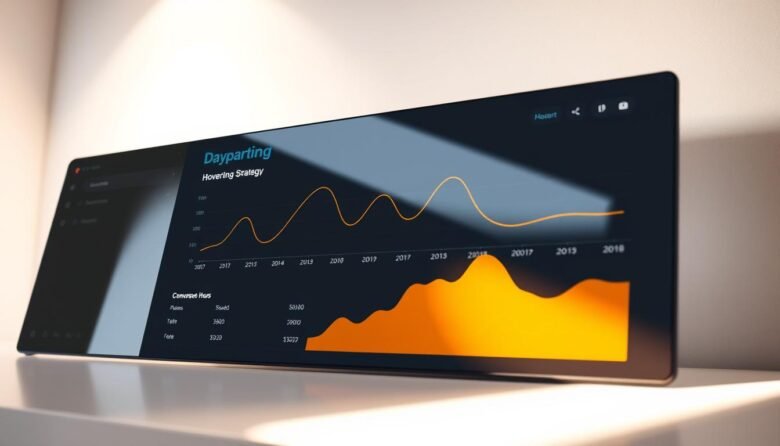
Running your ads around the clock can drain your budget fast. Not every moment of the day delivers the same results. Your customers are most active during specific windows.
This is where a smart scheduling approach comes into play. By analyzing when your audience is most likely to convert, you can make your budget work much harder. The goal is to show your ads precisely when it matters most.
This method involves a close look at your campaign data. You identify the hours that consistently generate sales or leads. Then, you concentrate your spending during those high-performing periods.
The outcome is a more efficient use of your advertising dollars. You reduce waste and increase your overall return on investment. It’s a powerful way to gain an edge in competitive markets.
Key Takeaways
- Focus your ad budget on times when your audience is most active.
- Analyze performance data to find your best conversion hours.
- This approach helps maximize your return on ad spend.
- Significantly cut down on wasted impressions and clicks.
- Effective scheduling requires understanding customer behavior patterns.
- Continuous monitoring is essential for refining your approach over time.
Understanding Dayparting in Modern Digital Advertising
Long before digital platforms existed, broadcasters understood the importance of timing their content. Radio and television networks divided programming into distinct segments throughout the day.
The Evolution from Traditional Media to Online Campaigns
Traditional media scheduled programs based on audience availability. Children’s shows aired after school, while prime-time content targeted family viewership.
Advertising rates reflected these audience size variations. Digital platforms later adapted this scheduling concept for online campaigns.
This transition allowed advertisers to reach their target audience when they’re most active online. The approach moved beyond fixed broadcast schedules.
Why Timing is Critical in Amazon PPC
Amazon’s recent introduction of hourly performance data represents a significant advancement. The Hourly Sponsored Product Report provides unprecedented insights.
This granular data reveals precise customer shopping patterns throughout the day. Advertisers can identify when buyers browse, click, and convert.
Strategic budget allocation during high-conversion periods maximizes results. It also minimizes waste during low-performing hours of the week.
Analyzing Hourly Performance Data for Effective Insights
The key to smarter spending lies in understanding when your customers are most engaged. Detailed performance data reveals patterns that can transform your advertising results.
By examining specific time blocks, you gain valuable insights into customer behavior. This approach helps you allocate resources more effectively.
Interpreting the Hourly Sponsored Product Report
Amazon’s Sponsored Product Report provides detailed information about customer activity. Downloading 14 days of data gives you a solid foundation for analysis.
Create pivot tables in Excel to organize this information by hour. Use rows for “Start Time” and values for key metrics like clicks, spend, and sales.
Conditional formatting with color scales makes trends instantly visible. Green highlights high-performing periods while red flags areas needing attention.
Look for consistent patterns rather than isolated results. Focus on time slots where conversions remain low despite significant spending.
This analysis helps identify prime opportunities for adjustment. The goal is to maximize results by concentrating efforts when they matter most.
Implementing a dayparting strategy, hourly optimization
Choosing the right method to analyze your advertising data is a crucial step. You have two main paths: a hands-on manual approach or using modern automation tools.
Each option offers different benefits depending on your available time and technical comfort.
Manual Analysis versus Automation with ChatGPT
Manual analysis involves downloading the Sponsored Product report and working in Excel. You create pivot tables and apply conditional formatting to spot trends.
This method gives you complete control over the data. You can spot small details that automated systems might miss.
However, it requires a good understanding of Excel and a significant time commitment.
Alternatively, you can use ChatGPT to automate the process. Upload your report and run a structured prompt.
The AI cleans the data and identifies key patterns. It finds your worst and best performing hours and days.
Always verify the initial results against your backend data to ensure accuracy. Once confirmed, this process can save you hours each month.
Your choice depends on your specific needs for control versus efficiency.
Optimizing Bids and Budgets Through Data-Driven Adjustments
Effective budget management requires translating data insights into precise bid adjustments. The analysis reveals clear patterns in customer behavior throughout the day. These patterns guide smarter allocation of your advertising funds.
Look for continuous time periods where spending remains high but conversions stay low. These patterns indicate where to reduce bids. For example, evenings from 19:00 to 23:00 might show poor conversion rates.
Using Conditional Formatting to Highlight Trends
Color-coded cells make performance trends instantly visible. Green highlights high-performing periods while red flags problematic time slots. This visual approach helps identify budget drains quickly.
Focus on sustained patterns rather than isolated hours. Consistent low conversion rates across multiple days signal real opportunities. This method prevents overreacting to temporary fluctuations.
Adjusting Bids in Low-Conversion Time Slots
Reduce bids during periods with high costs and low conversion rates. However, maintain bids during unexpected high-performing times. Midnight might show strong results with minimal spend.
Target only underperforming campaigns within specific time frames. Avoid applying blanket rules across all campaigns. This granular approach preserves effective advertising while cutting waste.
Balance multiple metrics when making adjustments. Consider conversion rate, cost per click, and total spend together. This ensures bid changes improve overall campaign efficiency.
Utilizing Tools and Techniques for Hourly Optimization
The right automation tools can transform how you manage your advertising efforts across different times. Quality software helps you implement precise scheduling controls. This ensures your campaigns run when they deliver the best results.
Key Features in Effective Ad Automation Software
Look for software that works with all Amazon ad types. This includes Sponsored Products, Sponsored Brands, and Sponsored Display. Complete campaign coverage ensures consistent application of your scheduling approach.
The platform should handle both bid and budget adjustments. Top-of-search scheduling is an advanced feature worth considering. These controls give you flexibility for different advertising scenarios.
An easy setup process is crucial for quick implementation. Complex tools often create barriers to effective use. User-friendly interfaces help you apply your scheduling plans efficiently.
Data visualization capabilities are essential for monitoring performance. Look for hourly and daily charts that show clear trends. This helps you verify that your schedules match actual customer behavior patterns.
Scheduling options should allow future-dated changes. This enables planning around promotions or seasonal events. You can set adjustments in advance rather than making last-minute changes.
The ability to evaluate scheduling effectiveness over time is often overlooked. ROAS improvements typically plateau after about two months. Regular strategy resets help maintain advertising efficiency.
Platforms like atom11 use Amazon Marketing Stream technology for advanced scheduling. They provide AI-powered recommendations for bid and budget adjustments. This helps optimize your Amazon ads performance through intelligent scheduling.
Scheduling Ads During Peak Consumer Activity
Finding the perfect moment to connect with your audience is crucial for advertising success. Your goal is to show your messages when people are most receptive and ready to act.
Identifying and Targeting High Conversion Hours
Historical data reveals clear patterns in consumer behavior. Wednesday and Thursday often show strong performance, while Saturday typically sees a significant drop.
Specific times like 10-11 AM and 8-9 PM represent popular shopping periods. However, these patterns vary across industries and audiences.
Breakfast establishments benefit from promoting during morning hours. Bars and restaurants see better results concentrating efforts from Thursday through Saturday.
The engagement sweet spot occurs when your audience is active but competition is low. This creates maximum visibility without excessive costs.
B2B advertisers should consider non-traditional hours. Small business owners often work outside standard business hours.
Align your schedule with specific business objectives. If driving phone calls, focus on times when staff is available to answer.
Advanced techniques include dynamic triggers based on real-time conditions. Some campaigns use temperature thresholds to display relevant messages.
Continuous monitoring ensures your approach remains effective as consumer behavior evolves throughout the day and week.
Overcoming Common Challenges in Dayparting Strategies
While scheduling ads around peak hours seems logical, this approach isn’t universally effective across all business models. E-commerce operations with diverse audiences selling popular products may actually lose valuable prospects by restricting their campaigns to specific times of day.
Many advertisers face a statistical significance challenge. They lack sufficient conversion data per hour or day to achieve the 90% confidence level needed for reliable decisions. For example, if Tuesday generates 20 conversions from 500 clicks while Wednesday produces 50 from the same traffic, is this a meaningful pattern or random variation?
Competition during popular time slots can drive up costs. When multiple businesses identify identical peak periods, bidding wars eliminate efficiency gains. Managing campaigns across different time zones adds complexity, as peak hours vary by region.
Consumer-facing businesses with steady traffic throughout the week often see limited benefits. Their consistent conversion patterns offer few opportunities for time-based optimization. Honest assessment of your data volume and audience behavior is essential before implementing any scheduling restrictions.
Leveraging Ad Automation for Enhanced Amazon Ad Performance
Modern advertising platforms now leverage automation to significantly enhance campaign outcomes. These tools move beyond simple scheduling to provide intelligent, data-driven management.
They analyze performance across multiple metrics simultaneously. This delivers a comprehensive view of what drives results.
Case Examples: atom11 and Real-Time Data Analysis
Platforms like atom11 utilize Amazon Marketing Stream for advanced capabilities. They offer detailed visualization of how ads perform throughout the day and week.
The system identifies peak times for conversion rate and other key parameters. Proprietary AI then generates actionable recommendations for bid and budget adjustments.
Consider the Addiko Bank case. Their analysis revealed consistently poor lead generation during nighttime hours.
By excluding those periods, they allocated their budget more efficiently. This improved their overall campaign results.
Unilever’s Clear campaign demonstrated even more sophisticated automation. Dynamic banners were triggered only when the temperature exceeded 30°C.
This ensured messaging was highly relevant to immediate consumer needs. Automation enables rapid response to shifting patterns that manual analysis would miss.
These examples show how automation scales sophisticated management across large portfolios. It makes advanced techniques practical for advertisers of all sizes.
Wrapping Up: Strategies to Boost ROI with Dayparting
Effective advertising management goes beyond creative content to include precise timing considerations. A well-planned dayparting approach concentrates your efforts when they matter most.
Think of this method like a farmer timing irrigation. Both focus resources during peak effectiveness periods rather than spreading them evenly. This targeted approach maximizes impact.
Whether using manual analysis or automation tools, the goal remains consistent. Identify when your audience is most receptive and adjust your campaigns accordingly. Continuous refinement ensures lasting results.
This strategic timing can significantly improve key metrics. You’ll see better returns while controlling costs. Start with thorough data analysis and build from there.