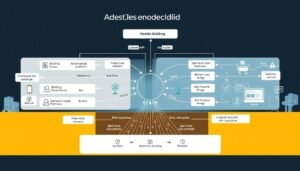
Header bidding represents a sophisticated approach for publishers to maximize their advertising earnings. This system allows multiple demand partners to compete simultaneously for ad inventory. However, this competition operates within strict time constraints that many publishers overlook.
When bidders exceed their allocated response window, they face disqualification from the competition. This creates a scenario where valuable revenue opportunities vanish without warning. Publishers may never realize they’re missing out on higher-paying demand sources.
The Prebid framework typically allows 1-2.5 seconds for partners to submit their offers. Finding the right balance is crucial for optimal performance. Too short a window excludes potential high-value participants. Too long delays page loading and frustrates users.
This delicate timing mechanism serves as a critical revenue optimization tool. Many publishers use default configurations without considering their specific traffic patterns. This oversight can result in significant financial losses that accumulate across thousands of daily transactions.
Key Takeaways
- Auction timeouts define how long bidders have to respond to ad requests
- Default timeout settings may not suit every publisher’s specific needs
- Proper timeout configuration balances bid competition with user experience
- Revenue loss from improper timeouts often goes undetected
- Timeout optimization requires continuous monitoring and adjustment
- Industry best practices suggest 1-2.5 second windows for optimal performance
- Each timeout represents a missed revenue opportunity for publishers
Understanding Auction Timeouts and Their Impact
Effective header bidding implementation requires understanding the temporal constraints that shape bidder participation. These response windows determine which advertising partners can compete for each impression opportunity.
Defining Timeouts in Header Bidding
In Prebid systems, timeouts represent the specific period measured in milliseconds during which the platform waits for demand partners to respond. When a user loads a webpage, Prebid sends bid requests to connected bidders who must reply within this allocated window.
There are three possible outcomes for each bid request. A partner may submit a competitive offer, send a “no bid” response indicating disinterest, or fail to respond entirely. Only the last scenario constitutes a true timeout situation.
Effects on Bid Responses and Revenue
Timeout configuration directly influences the number of participating demand partners. Properly set windows maximize competition while maintaining acceptable page load speeds. This balance is crucial for revenue optimization.
A 20% timeout rate effectively reduces a bidder’s participation by one-fifth. This statistically eliminates potential high-value responses that could generate significant earnings. Publishers face a fundamental trade-off between capturing more bids and ensuring fast page rendering.
Shorter response periods improve user experience but risk excluding valuable partners. Longer windows increase bid collection but potentially delay content delivery. Finding the optimal balance requires careful analysis of specific traffic patterns and partner performance.
The Mechanics Behind Prebid Timeouts
Prebid’s technical architecture employs distinct timeout mechanisms that publishers must understand. These components work together to manage the header bidding process efficiently while protecting against system failures.
Auction Timeout vs. Failsafe Timeout
The auction timeout represents the primary timeframe for Prebid operations. This setting determines how long the system waits for bidders to respond before proceeding to the ad server call.
Meanwhile, the failsafe timeout serves as a backup safety measure. Implemented outside Prebid.js using JavaScript’s setTimeout() function, it activates only when the main auction encounters problems.
Proper configuration requires the failsafe timeout to be significantly longer than the auction timeout. The recommended formula is failsafeTimeout = prebidTimeout + 500. This prevents the “timeout trap” where a single SSP failure triggers the failsafe prematurely.
Prebid Timeout Sequence Explained
When a user loads a page, Prebid initiates parallel client-side and server-side auctions. The system begins counting down the allocated time for demand partners to submit their response.
For publishers using Prebid Server, the s2sConfig timeout should be set at 50-75% of the auction timeout. This accounts for network delays between client and server.
The Prebid system automatically adjusts the actual timeout slightly below the configured maximum. This 30-100ms safety margin prevents missing the ad server call due to processing delays.
Once the timeout period expires, late bidders are excluded from competition. The completed auction then passes the winning bid to the ad server within the allocated timeframe.
Optimizing Timeout Settings, Auction Latency, Lost Bids for Revenue Growth
Publishers face a delicate balancing act when configuring response windows for their advertising partners. This process requires careful consideration of both revenue objectives and visitor expectations.
Network travel time significantly affects how long it takes for partners to respond. Data must journey from publisher servers to bidder systems and back. Accounting for this delay ensures realistic response expectations.
Balancing Bid Collection and User Experience
Different demand partners operate at varying speeds based on their technical infrastructure. Some respond quickly while others need more processing time. Understanding these patterns helps publishers set appropriate response windows.
Page loading speed remains critical for maintaining positive visitor engagement. Research shows bounce rates increase substantially when load times extend beyond certain thresholds. This creates a direct connection between configuration choices and user retention.
The optimal response window typically falls between 1000-2500 milliseconds. Finding the right balance maximizes competition without creating noticeable delays. Publishers have reported significant revenue improvements by adjusting these parameters.
Mobile traffic often requires different configurations than desktop visitors. Network conditions and processing capabilities vary across devices. Implementing device-specific approaches can enhance overall performance.
Some organizations have achieved revenue increases approaching 8% through careful adjustment of response periods. This demonstrates the financial impact of proper configuration while maintaining acceptable experience metrics.
Analyzing Bidder Timeouts and Their Revenue Implications
The frequency of unresponsive bidders directly impacts the financial performance of advertising operations. Publishers track response rates to understand how often partners fail to submit offers within allocated periods.
When calculating these metrics, divide timed-out requests by total requests. For example, 20 failures from 100 requests equals a 20% non-response rate. This measurement helps identify problematic partners.
Impact on Bid Competition
Frequent non-responses reduce competitive pressure in advertising contests. Fewer participants mean less urgency for remaining bidders to submit their best offers.
Each missing response represents a lost opportunity for higher pricing. The absence of competitive tension can lower winning offer values across thousands of daily transactions.
Quantifying Revenue Loss from Missed Bids
Individual losses seem small but accumulate significantly over time. If one bidder fails to submit a $2.00 offer, a $1.50 bid might win instead.
This creates a $0.50 loss per transaction. Multiplied across numerous daily occurrences, the financial impact becomes substantial. A 20% non-response rate effectively removes one-fifth of potential participation.
Optimization efforts can yield significant improvements. Reducing non-responses increases competitive pressure and revenue outcomes for publishers.
Best Practices for Header Bidding and Timeout Configuration
Successful monetization through header bidding demands careful consideration of geographical and device-specific parameters. Publishers must recognize that one-size-fits-all approaches rarely deliver optimal results in today’s fragmented digital landscape.
Customizing Timeouts for Different Devices and Regions
Device type significantly impacts how partners respond to bid requests. Mobile users on cellular networks require different configurations than desktop visitors with broadband connections. Smart publishers implement device-specific strategies.
Geographic location also plays a crucial role in response performance. Bidders with strong infrastructure in North America may show slower response times for traffic from Asia or Latin America. Regional customization ensures maximum participation.
Regular performance reviews help identify inactive or consistently slow-responding partners. Remove underperforming bidders to improve page load speeds and focus on high-quality demand partners. This optimization directly enhances user experience.
Implement differential strategies for various bidder categories. Premium partners with historically strong performance deserve preferential treatment. Continuous monitoring allows for ongoing refinement based on changing traffic patterns.
Analytics tools provide essential insights into bidder behavior across devices and regions. Use data-driven approaches to make informed configuration decisions. This proactive stance separates successful publishers from average performers.
Tools and Techniques for Measuring and Adjusting Timeouts
Modern publishers need advanced measurement tools to optimize their header bidding performance. The right instrumentation provides visibility into how response windows affect competition and earnings.
Prebid’s native Analytics Module tracks critical performance indicators. This built-in solution monitors response rates and completion metrics across all participating companies.
Utilizing Analytics and Third-Party Modules
Technical configuration happens through Prebid’s API methods. Publishers can set global parameters using pbjs.setConfig() or specify auction-specific values with pbjs.requestBids().
Browser extensions like AdWizard help verify current configurations. This eliminates uncertainty about active values across different page types.
Third-party platforms offer deeper insights than native reporting. These tools provide granular breakdowns by device type and geographic location. Detailed performance scorecards inform smarter optimization decisions.
Implementing A/B Testing and Dynamic Adjustments
Dynamic approaches automatically customize response windows based on real-time conditions. Factors like network speed and user location personalize the experience.
Controlled experiments compare different configurations across matched traffic samples. This methodology measures impact on both revenue and user satisfaction.
Wrapper providers bring valuable cross-network insights to optimization efforts. Their technical expertise helps prevent common configuration mistakes.
Advanced automation systems continuously refine parameters without manual intervention. AI-powered tools adjust participation based on performance trends while maintaining competition quality.
Final Reflections on Streamlining Auction Performance
Successful publishers recognize that timeout management is an evolving discipline requiring regular assessment and adjustment. There exists no universal configuration that works optimally across all scenarios.
The ideal response window depends on multiple factors including traffic patterns and partner performance. While 1000-2500ms serves as a reliable starting range, continuous testing reveals publisher-specific sweet spots.
Proper configuration delivers significant advantages. Fast page loads maintain user satisfaction while maximizing bid collection. This balance enhances overall advertising performance.
Avoid common pitfalls like uniform application across devices or connecting too many partners. Regular monitoring ensures configurations adapt to changing conditions.
Optimization represents an ongoing commitment rather than a one-time setup. Publishers who embrace this approach achieve superior results in both user experience and financial returns.